Are you a
Homeowner?
Are you a
Homeowner?
This guide summarises some of the key changes introduced in 2019 and explains the significance of the 2020 amendment.
BS 5839-6 is the British Standard that provides recommendations for the design, installation, commissioning and maintenance of fire detection and fire alarm systems in domestic premises. It sets out recommendations on the appropriate grade of fire alarm system, the correct siting and selection of fire alarms, and the methods for testing and commissioning systems to ensure they operate as intended. The standard also details the information that should be provided to the end user, the documentation and certificates that should be issued upon completion, and the ongoing responsibilities for inspection, testing and maintenance.
The 2019 revision of BS 5839-6 introduced significant updates to the grading structure of domestic fire alarm systems. Domestic fire alarm systems are classified from Grade A to Grade F, and the 2019 update amended these Grades. Grades B and E were removed entirely, while Grades D and F were subdivided to distinguish between systems with tamper-proof standby supplies and those with user-replaceable batteries, resulting in the introduction of Grades D1, D2, F1 and F2. The current BS 5839-6 Grades are as follows:
Grade A: A system which incorporates CIE conforming to BS EN 54‑2 and power supply equipment conforming to BS EN 54‑4, and which is designed and installed in accordance with all the recommendations of BS 5839‑1:2017, Section 1 to Section 4
Grade C: A system of fire detectors and alarm sounders connected to a common power supply, comprising the normal mains and a standby supply, with central control equipment
Grade D1: A system of one or more mains-powered detectors, each with a tamper-proof standby battery
Grade D2: A system of one or more mains-powered detectors, each with a user-replaceable standby battery
Grade F1: A system of one or more battery-powered detectors powered by a tamper-proof primary battery
Grade F2: A system of one or more battery-powered detectors powered by a user-replaceable primary battery
As well as a change to the Grades of fire alarm system, Table 1 of BS 5839-6 was updated in the 2019 revision, with Category LD2 now forming the typical minimum level of fire alarm coverage for most new or materially altered bungalows, flats, and two & three storey houses, increasing to Category LD1 for dwellings such as four storey houses or supported housing.
The categorisation of domestic fire alarm systems describes the extent of coverage provided within a dwelling in which fire alarms should be installed. BS 5839-6 sets out three categories of life protection for domestic premises, each reflecting an increasing level of coverage and corresponding improvement in early warning capability.
LD1 – A system that provides detection throughout the dwelling, with detectors installed in all circulation areas forming part of the escape route and in all rooms and areas other than those presenting only a negligible risk of ignition.
LD2 – A system incorporating detectors in all circulation spaces that form part of the escape route and in specific rooms or areas identified as presenting a high risk to occupants, such as kitchens or principal habitable rooms.
LD3 – A system in which detectors are provided only in circulation spaces that form part of the escape route from the dwelling.
Read more for a further breakdown of information of understanding the Categories included in the 2019 revision here.
Other changes include the introduction of a new table covering the testing and servicing of fire alarm systems by grade, revised and expanded recommendations for Grade C systems, and updates to the guidance to reflect the publication of BS 5839-1:2017 along with other relevant standards issued since the previous 2013 edition.
The 2020 amendment added the following critical warning that many children do not wake to traditional fire alarm tones;
WARNING. Experience has shown that children might not be woken by fire alarm tones. It is important that children are never left alone in a dwelling. Families should have a fire escape plan that is rehearsed, so that everyone knows how to escape if fire occurs. The immediate priority when fire occurs is to ensure that any sleeping children are woken from sleep and are immediately taken to a place of safety outside the property, along with all other occupants. The fire and rescue service should always be called without delay, no matter how small the fire.
Research undertaken by the University of Dundee, and later highlighted on BBC Watchdog Live, demonstrated significant limitations in the ability of standard fire alarm tones to rouse children from sleep. The study found that only 28% of children responded to a typical domestic fire alarm signal, and further real-world testing showed that the vast majority of children did not wake when their own household fire alarms were activated.
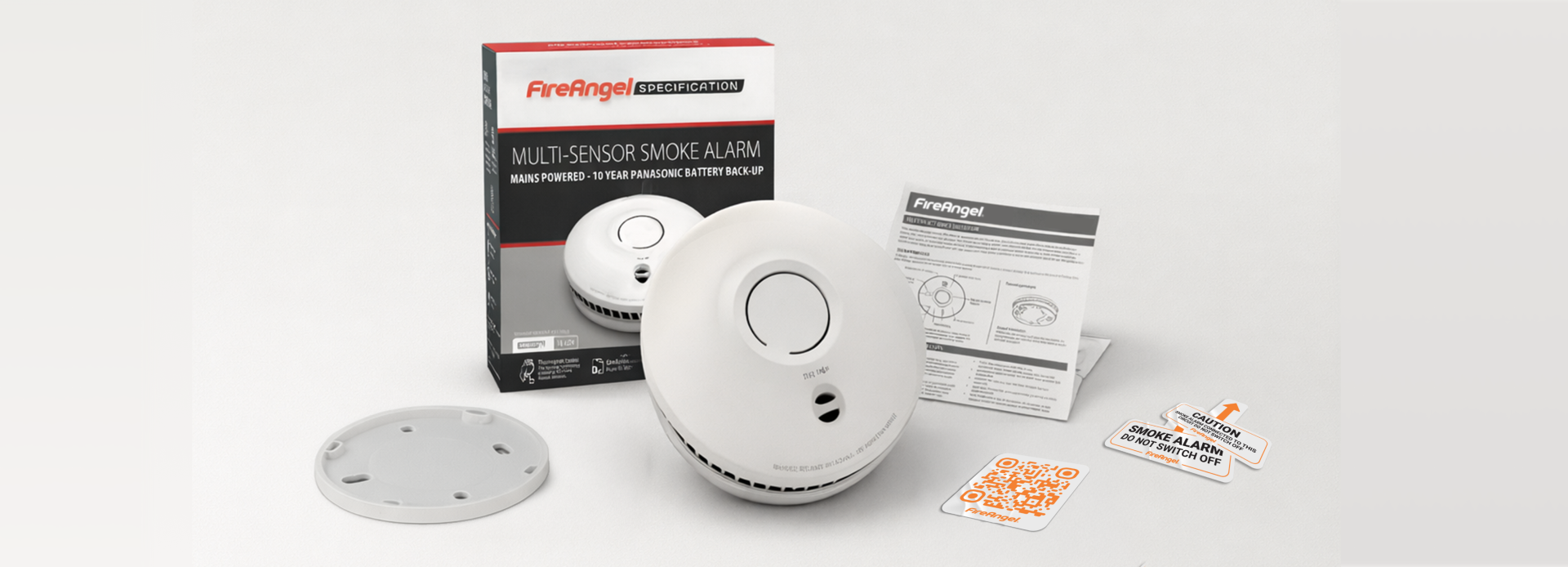
FireAngel Grade D1 fire alarms now feature a home occupier information QR code label, designed to be applied directly to the consumer unit. By scanning the QR code, residents gain instant access to essential safety guidance, including important information highlighting that children may not always wake to traditional fire alarm tones. This ensures critical fire safety advice is always easily accessible when it matters most.
Because standards evolve, professionals must stay informed of changes to ensure systems remain suitable for modern living environments and changing risk profiles.
By understanding the updates made in 2019 and the important safety message added in 2020, industry professionals can make better decisions to protect residents, especially children, from fire.
If you can't find what your looking for on our blogs and looking for further guidance and advice, our UK-based Customer Support team are on hand all week from 8:30am until 5:30pm, they can answer any further queries you may have on our products, solutions or services.


