Are you a
Homeowner?
Are you a
Homeowner?
When specifying fire detection products, professionals are faced with a range of certification marks. While these logos may look similar, they represent different certification organisations that independently assess products against recognised standards, ensuring safety, quality, and performance. Understanding what each certification body does can help specifiers make more informed purchasing decisions.
Depending on the safety product at hand, certification is either mandatory or voluntary. For example, smoke alarms legally require third party certification by an approved body before they can be UKCA or CE marked, while for CO alarms marks like the BSI Kitemark are voluntary but strongly recommended. Many certification bodies, like BSI Kitemark, LPCB and VdS, also exceed the basic minimum legal requirement, providing extra assurance.
Third-party certification demonstrates independent assessment, giving specifiers, installers, and residents confidence that equipment is fit for its intended purpose.
Certification bodies do not create the product standards themselves. Instead, they independently assess products against recognised product standards, such as BS EN 14604 for smoke alarms and BS EN 50291 for carbon monoxide alarms. These certified, life-saving products can then be specified and installed in accordance with BS 5839-6, which sets out recommendations for domestic fire detection and fire alarm systems.
SGS is a global testing, inspection and certification organisation, operating laboratories and facilities across over 2,500 laboratories and business facilities across 115 countries, supported by a team of 99,500 dedicated professionals.
SGS certification provides independent assurance from an established third party that a product meets specific standards. It is also one of the key certification bodies used by FireAngel.
The BSI Kitemark provides over 120 years safety through rigorous independent expert testing. This process involves repeated assessments to verify performance claims and ensure long-term product reliability.
This independent certification is reflected in FireAngel’s range of safety products. Several FireAngel alarms carry BSI Kitemark certification, including FireAngel FP2620W2-R – Smart Smoke Alarm and FireAngel FA3322 – Digital Display CO Alarm.
LPCB is an internationally recognised third-party certification body for fire and security products and services, run by BRE Global.
LPCB is intended to help ensure fire and security products perform as specified.
VdS is an example of another widely recognised certification body. It specialises in corporate security and safety, including fire protection, security, natural hazard prevention and cyber security.
Highly regarded across Europe, VdS is an EU-notified body that provides Certificates of Constancy of Performance for products used in fixed fire protection systems.
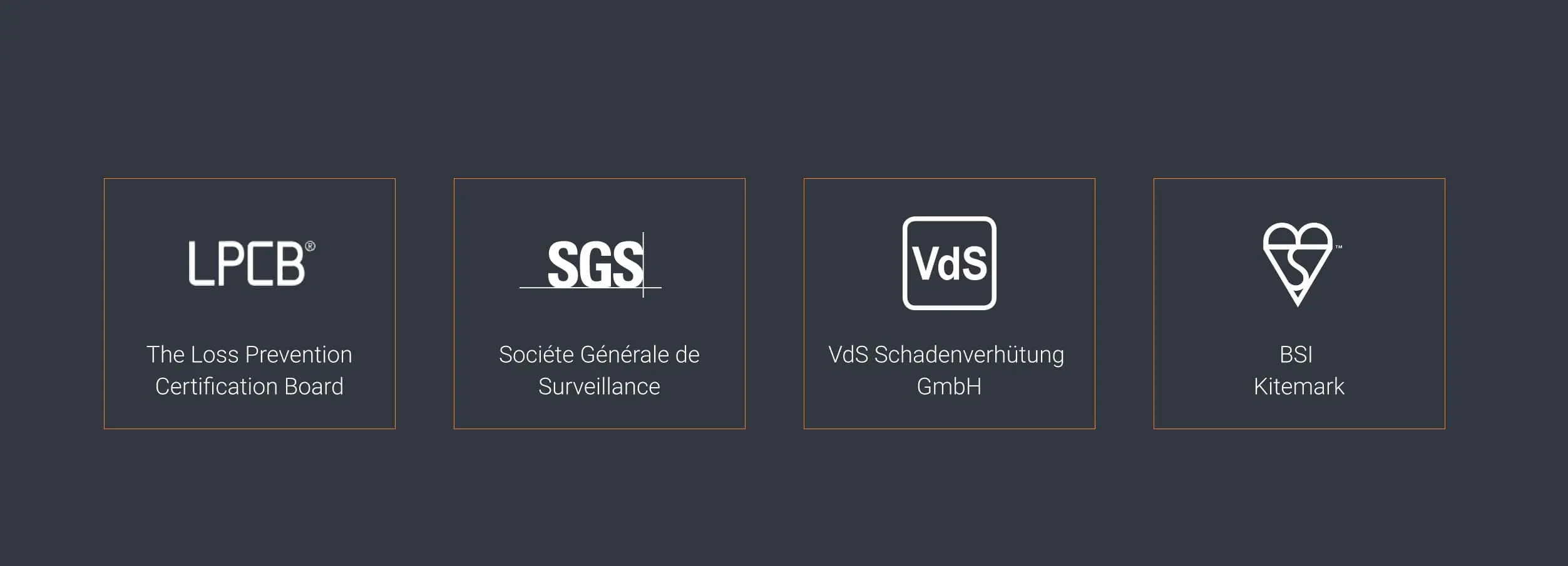
FireAngel’s new Spec+ range includes five Grade D1 fire and carbon monoxide alarm range for UK housing professionals, which are SGS certified. Installed in accordance with BS 5839-6, the Spec+ range delivers LD1 Maximum Protection, which is a system installed throughout a property that places detectors in all circulation areas that form part of the escape routes, and in all rooms and areas in which a fire might start, other than toilets, bathrooms and shower rooms.
The Spec+ range complies with recognised standards for smoke, heat and carbon monoxide detection, including BS 5446-2, EN 50291-1 and BS EN 14604, depending on the product.
FireAngel chose SGS as its certification partner because of its worldwide and international reputation in testing, inspection and certification. Its independent assessment verifies product safety and performance, building confidence for specifiers, installers, and residents. Importantly, the Spec+ range is certified by SGS, a UKAS accredited certification body, providing customers with confidence that FireAngel solutions meet the rigorous safety and performance requirements expected by housing providers and contractors.
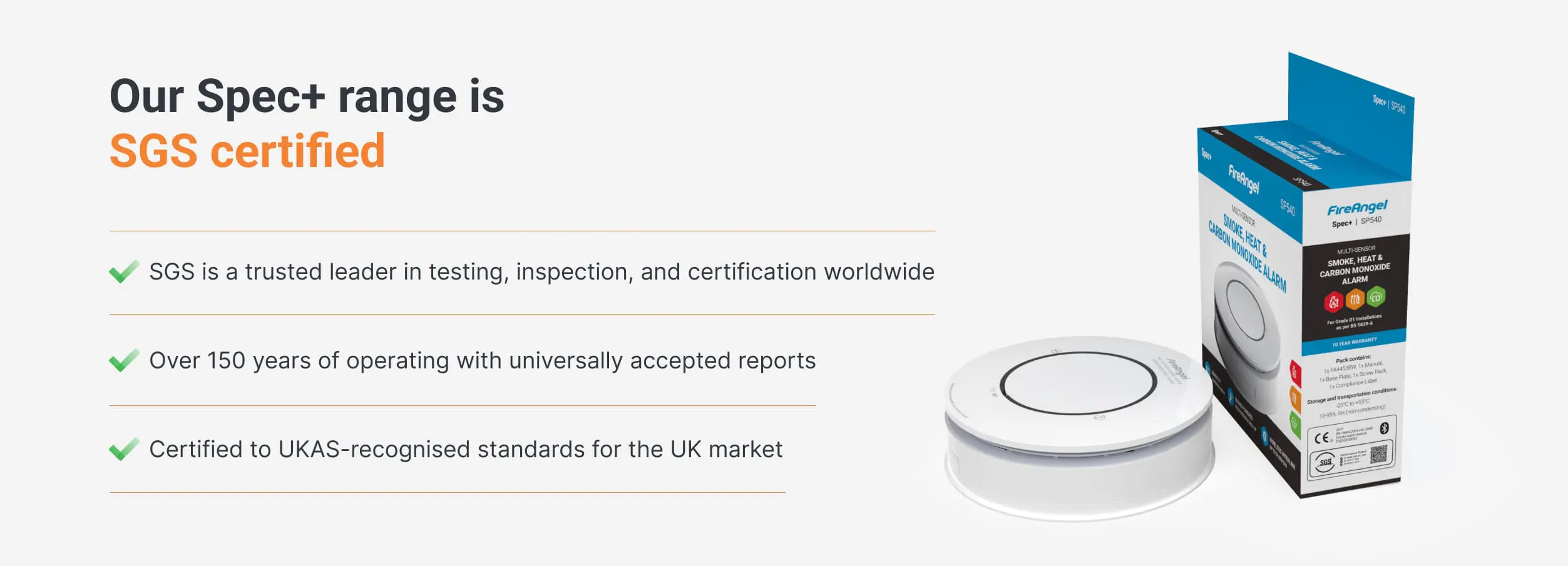
Certification bodies like SGS, VdS, and the BSI Kitemark, and LPCB play a critical role in the fire safety industry. By rigorously testing and certifying products, these certification bodies provide the necessary verification that products will perform reliably.
When specifying fire safety products, the key consideration is whether the product has been independently certified to the appropriate standard and is suitable for the building, system design and fire strategy. By looking beyond the logo alone, professionals can make more informed choices that support reliable, compliant fire safety outcomes.
Explore FireAngel’s certified alarm range to find reliable solutions designed to support safer homes and more confident specification decisions on the website here.
If you can't find what your looking for on our blogs and looking for further guidance and advice, our UK-based Customer Support team are on hand all week from 8:30am until 5:30pm, they can answer any further queries you may have on our products, solutions or services.