Are you a
Homeowner?
Are you a
Homeowner?
In short:
This year’s InstallerSHOW saw its highest traffic since the event’s inception, with over 40,000 visitors attending and over 900 exhibitors participating in the show. FireAngel took the opportunity to showcase its brand new all-encompassing range of domestic home safety alarms, developed for the UK professional market and designed with installers in mind. On the second day, CEO Nick Rutter hosted a thought leadership panel discussing the recent changes that the Building Safety Regulator has brought to current legislation.
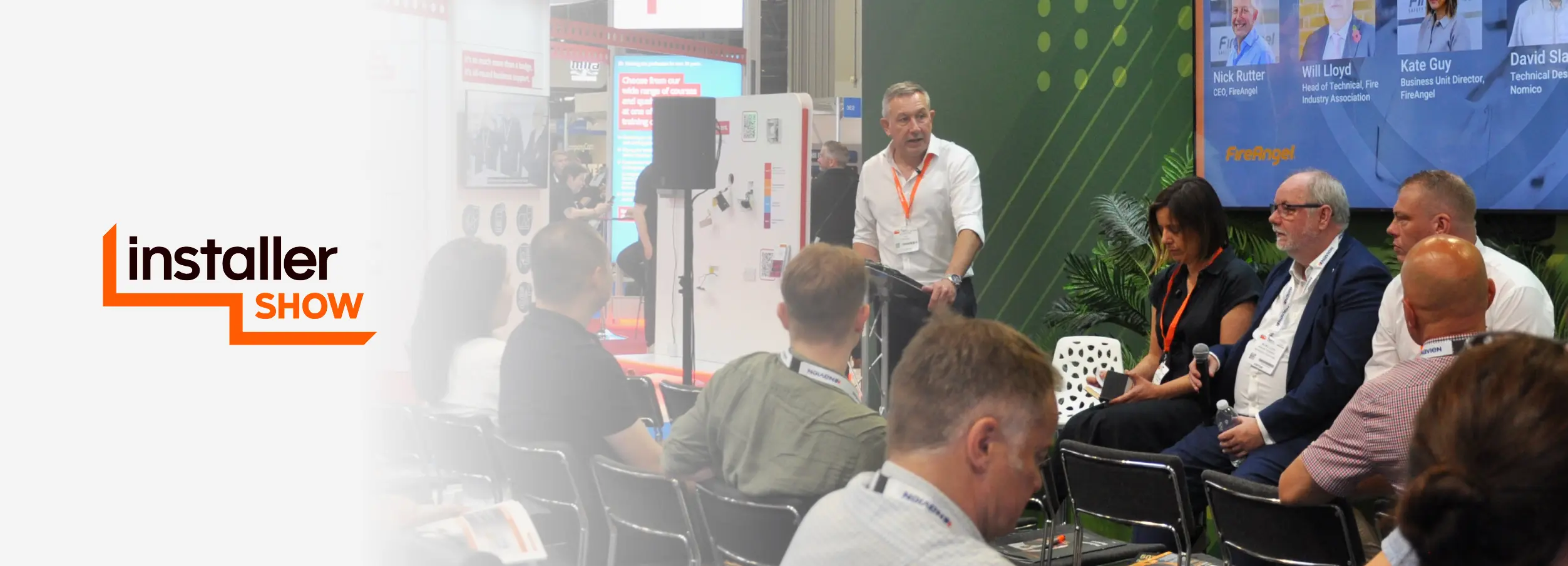
FireAngel hosted a panel discussion featuring guest panellist Will Lloyd, Head of Technical at the Fire Industry Association (FIA), titled ‘Key considerations for compliant fire alarm and carbon monoxide alarm placement, installation and management’. Alongside Will sat Kate Guy, Business Unit Director at FireAngel and David Cunningham, National Specification Manager at FireAngel.
The basis of the discussion demystified the complexity of changing UK regulations and the enhanced responsibilities now on all parties involved in the construction and remedial work of buildings in the UK, including installers and contractors. This included the challenges for businesses introduced by the Building Safety Act, what good compliance looks like and how the industry can continue to improve safety outcomes for residents.
Will highlighted the importance of conducting training at standard level, offered by independent bodies, such as the FIA, and some safety solutions providers, including FireAngel. As a leading training body, the FIA highly recommends that this training is undertaken as core standards such as BS 5839 are updated to remain compliant and competent.
As these legislations are consistently the subject of government consultations and reviews, it can be difficult to keep up with current changes and advice. Free training courses can place installers at an advantage, providing demonstrable accreditation which customers are more frequently requiring.
Discussing the new Gateway 2 & 3 regulatory checkpoints, Will explained the cultural shift in the UK from ‘design and build’ to ‘design then build’. Meaning that companies have to provide comprehensive and compliant designs before building work begins, approved at Gateway 2. Once the project is completed, proof that these designs have been executed accurately is required to pass Gateway 3, creating a thread of accountable compliance from conception to completion. Third party certification through DS 301 provides proof of competency in the design, installation, commissioning and maintenance of Grade D alarms.
Summarising, Will’s most important takeaway from the event is to join an industry body, such as the FIA, and ensure demonstrable competence and compliance through third party certification and consistent training.
With these legislative and regulatory changes looming over installers, David begun by highlighting the complexity of regulations and the challenges it can create for contractors. For example, the Building Regulations Approved Documents state that the minimum requirement for fire alarm installation is category LD3 whereas the related BS 5839 standard advises that LD2 should be applied to most domestic fire alarm installations.
Kate explained how solutions providers can support on this journey, offering consultation to installers and moving from a transactional relationship to a partnership that puts compliance first. FireAngel’s Design Service offers a fully insured end to end, third-party verified solution to this, with high-quality design drawings, witing schematics and a detailed system overview.
Echoing Will’s sentiment, Kate discussed how compliance must be viewed as a minimum standard, with manufacturers and solutions providers ready to help. Through collaboration with those installing the alarm systems, the industry will be adaptable to upcoming changes and competency will remain level with these legislative and regulatory updates.
The fire industry is traditionally slow to adopt new changes as life safety systems must be rigorously tested to ensure resident wellbeing. Social housing providers are equally sluggish to adopt new technologies, David explained that this is due to a nervousness to move from legacy solutions to a new safety system. However, there has been an increase in adoption of IoT and connected systems, particularly in cities like London.
Kate’s significant takeaway to improve outcomes for resident safety is to communicate and work with fire alarm providers, discussing bespoke solutions and training on their products. For David, education is key, accessing available information and training is paramount for installers and contractors as legislation develops and competence remains a commodity in the industry.
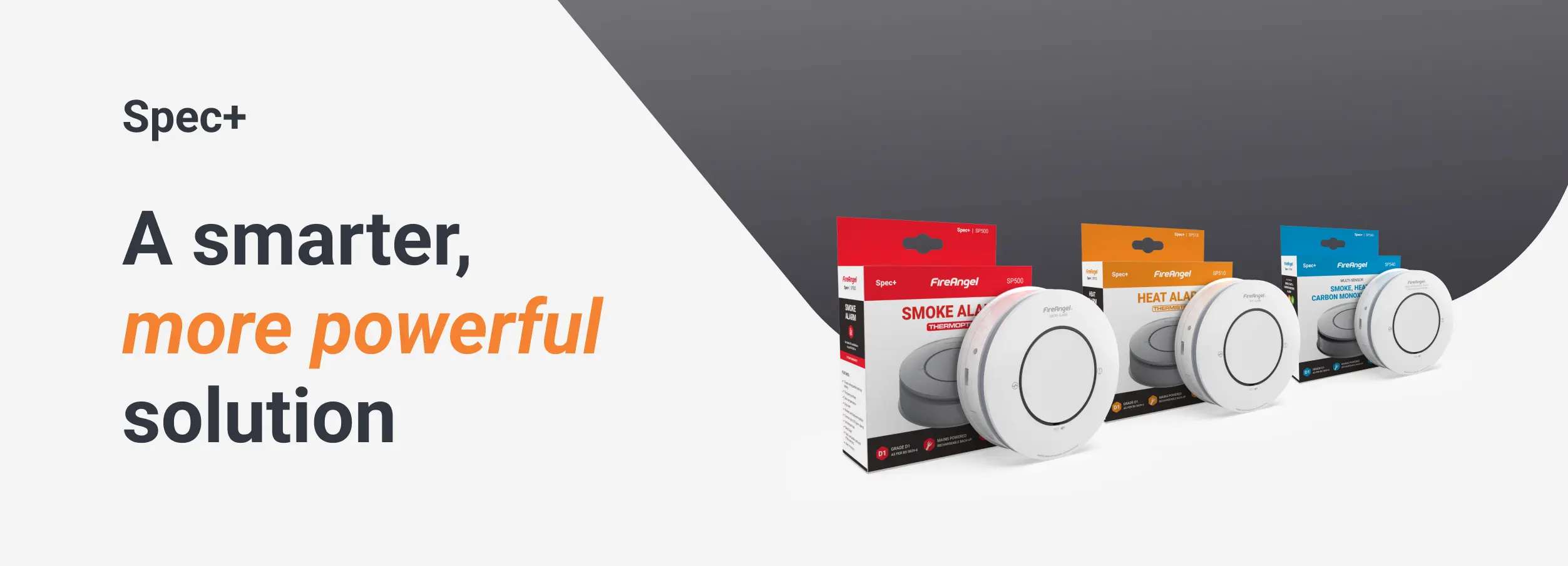
At the stand, FireAngel offered visitors the chance to get a sneak peek at the new Spec+ range, cased in the FireAngel vault. Now available to market, the range includes smoke, carbon monoxide, heat and combination alarms, suitable for all domestic applications.
The Spec+ range includes:
For contractors looking to develop an understanding of FireAngel products or would like to talk to the FireAngel team about compliant-focused partnerships, visit: https://www.fireangel.co.uk/contact-us/
Find out more about the Spec+ range here: https://www.fireangel.co.uk/specplus/
If you can't find what your looking for on our blogs and looking for further guidance and advice, our UK-based Customer Support team are on hand all week from 8:30am until 5:30pm, they can answer any further queries you may have on our products, solutions or services.