The matches are back, and so are the friends, the family and the takeaways that arrive five minutes after the whistle.
Hosting season runs hard from June into July, and the home does more work than any other time of the year. Kitchens are busy, doors are open, the spare room has someone in it, and the TV is on past midnight.
A short routine, run once before kick-off, keeps the night about the football. Here is the one we use.

Test before the first whistle
Two minutes, every alarm, every floor. Press the test button on each smoke alarm, each heat alarm in the kitchen and each carbon monoxide alarm near boilers, fires or BBQ-adjacent spaces. If you hear it, you are good. If you do not, that alarm has done its job by telling you to act before the match starts. A short walk around the house with the kettle on is enough.
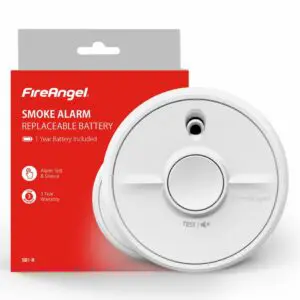
Need a quick refresher on the process? Our step-by-step guide to maintaining and testing your FireAngel smoke alarm walks you through it. If your alarm chirps once a minute, it is telling you the battery or sensor needs attention before kick-off, not during it.
The kitchen wins or loses the night
Cooking is the single biggest cause of accidental fires in UK homes. Home Office figures put cooking appliances at 44 percent of all accidental dwelling fires in the year to March 2025. Hosting tilts every one of those factors the wrong way at once. People are in and out, the oven goes on and off, the hob does double shifts at half-time, and someone is always trying to keep food warm while goals are being scored.
A few simple habits keep the kitchen on side:
- Stay in the room when anything is on the hob, even for a short cook. The two minutes you step away is the two minutes a fire starts.
- Use a timer for the oven, not the match clock. Stoppages, VAR delays and substitutions do not run to the same length each time.
- Keep tea towels, oven gloves and food packaging well clear of rings and grill pans. Crowded counters are kitchen fires waiting to happen.
- Do not leave a pan to rest after frying. Turn the hob off first, then walk away.
Smoke alarms do not belong in the kitchen, they will nuisance-alarm on toast and steam. The right unit for the room is a kitchen heat alarm, which responds to a rapid temperature rise rather than airborne particles. The difference between a smoke alarm and a heat alarm explains the choice in full.
The half-time test
The fifteen minutes between halves is the easiest behavioural prompt in the year. Press the test button on the alarm nearest the kitchen. Three seconds, and the room most likely to start a fire is also the one being watched by the alarm that matters most.

BBQs, gazebos and the CO no one expects
Charcoal does not stop producing carbon monoxide when the flames die down. NHS guidance on carbon monoxide poisoning is clear: never bring a BBQ inside, into a tent or under a closed gazebo, even after cooking. CO has no smell and no warning. The alarm is the only thing that tells you it is there.
If the weather changes and the BBQ has to come under cover, move it out from under the canopy or stop using it. A working CO alarm should sit near any boiler, gas fire or solid fuel appliance indoors. The FA3322 carries the Which? Best Buy badge and meets EN 50291. Test it before guests arrive. For a wider view of the range, see the best carbon monoxide alarms guide.
Electrical and the TV-corner pile up
Watch parties are extension lead season. Four-way blocks daisy-chained to power the TV, the soundbar, the consoles and the phone chargers, all running for four or five hours. Run the check before kick-off:
- One extension lead per socket, not two stacked together.
- No high-wattage gear, like kettles or heaters, running off a multi-way block.
- Cables not under rugs, not pinched behind sofas, not warm to the touch.
- If a plug is hot or a cable is damaged, take it out of service. Replace, do not tape.
Electrical Safety First has full guidance on overload risk if you want to read further.
Spare rooms, sofas and the guest plan
Guests do not know your home in the dark. Two minutes when they arrive: show them the alarm on their floor, show them the back door, and show them where the keys hang. If you have an upstairs alarm and the bedrooms are upstairs, that is the alarm doing the heaviest work tonight. The FireAngel homeowner solutions guide walks through alarm placement room by room if you are not sure what you have.
An optical smoke alarm on the landing is the standard fit, designed to react to the slow-smouldering fires that come from bedding, sofas and electricals. The teammate that is always on is not the friend who never leaves the sofa. It is the alarm above the staircase, doing nothing until it has to.
Your best defence, everyday
The tournament ends in July. The kitchen, the spare room and the family hosting do not. The same five-minute routine works for any day or night the house is fuller than usual. Test the alarms. Watch the hob. Keep the gazebo open. Walk guests to the exits.
If you are not sure which alarms cover which rooms, the FireAngel homeowner range and the find the right alarm tool walk you through it room by room. The job is to enjoy the football. The alarm has the rest.
FAQ
Q: How often should I test my smoke alarm?
A: Once a week. Press the test button, wait for the full alarm sound, then release. Use the half-time break in any live event as a reliable reminder.
Q: Can I use a BBQ under a gazebo?
A: Only if the gazebo is fully open on all sides and the BBQ is well away from any side wall or canopy edge. Closed-side gazebos, tents and porches all trap carbon monoxide from charcoal. NHS guidance is to never bring a BBQ into any enclosed space, even after cooking has finished.
Q: Where should I place a carbon monoxide alarm?
A: Near any fuel-burning appliance: gas boiler, gas fire, wood burner, solid fuel stove. Mount at head height where possible, and never directly above a heat source. A second unit near sleeping areas adds overnight cover.