Carbon monoxide (CO) is often called the "silent killer" because it is impossible to detect using human senses.
You can’t see it, smell it, or taste it, making it particularly dangerous in homes and rented properties. Produced when fuels such as gas, oil, wood, coal, or charcoal do not burn completely, carbon monoxide can quickly build up indoors if appliances are faulty, poorly maintained, or inadequately ventilated.
When inhaled, carbon monoxide enters the bloodstream and attaches to haemoglobin, reducing the amount of oxygen that can be carried around the body. This deprives vital organs of oxygen and can lead to serious illness, long-term health complications, and in severe cases, death.
What happens at different CO PPM levels?
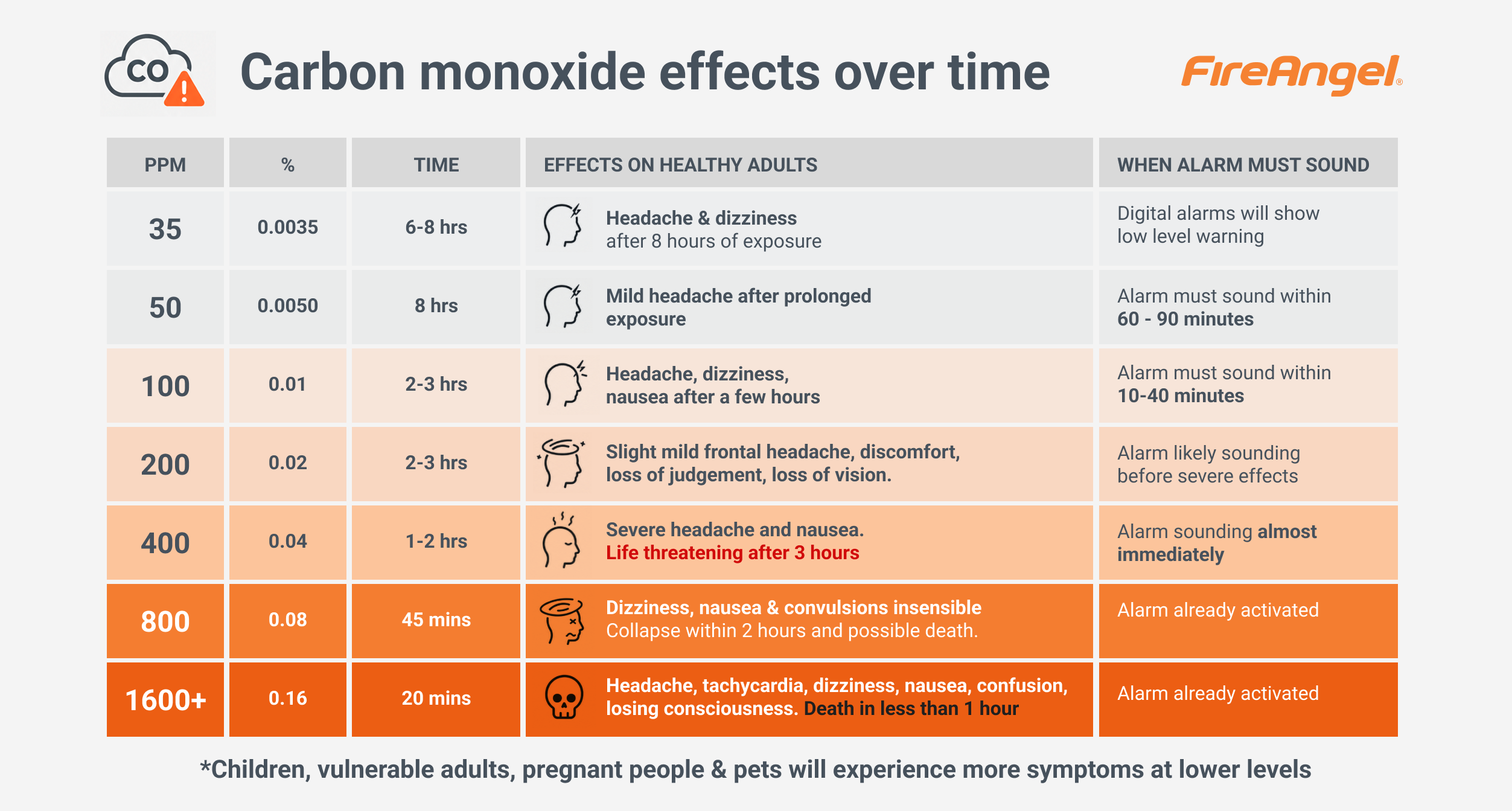
The concentration of carbon monoxide in the air is measured in parts per million (ppm). The higher the ppm level and the longer the exposure, the more dangerous the effects become.
At 35 ppm, the concentration is considered the maximum allowable level for continuous exposure over an eight-hour period.
At 50 ppm, a healthy adult may develop a slight headache after several hours of exposure. Young children and pregnant people may be more vulnerable to the effects of carbon monoxide, as CO reduces the blood’s ability to carry oxygen, faster. They may develop symptoms such as headache, dizziness, nausea, unusual tiredness, or vomiting.
At 150 ppm, a slight headache may develop after around 90 minutes.
At 200 ppm, symptoms such as headache, fatigue, dizziness, and nausea may occur within 2-3 hours.
At 400 ppm, frontal headaches can develop within 1-2 hours. Exposure at this level becomes life-threatening after approximately three hours.
At 800 ppm, dizziness, nausea, and convulsions may occur within 45 minutes. A person can lose consciousness within two hours, and death may occur within 2-3 hours.
At 1,600 ppm, headache, dizziness, and nausea can appear within just 20 minutes. Death is possible within one hour.
These figures demonstrate how rapidly carbon monoxide can become life-threatening, particularly when high concentrations are present indoors.
Common symptoms of carbon monoxide poisoning
One of the biggest dangers of carbon monoxide poisoning is that the symptoms can easily be mistaken for common illnesses such as flu, food poisoning, exhaustion, or a viral infection.
Early symptoms include:
- Headache
- Dizziness
- Nausea
- Fatigue
- Shortness of breath or difficulty breathing
As exposure increases, symptoms become more severe and can include:
- Confusion
- Loss of coordination
- Convulsions
- Collapse
- Loss of consciousness
If exposure continues, carbon monoxide poisoning can be fatal.
Because symptoms often develop gradually, many people may not realise they are being exposed until they become seriously unwell. This is why a carbon monoxide alarm is an essential safety device for every home.
What to do if your carbon monoxide alarm goes off
A carbon monoxide alarm provides an early warning before symptoms become severe. If your FireAngel carbon monoxide alarm is sounding with four loud beeps, you should take immediate action.
Open doors and windows to increase ventilation, stop using any fuel-burning appliances, switch them off if it is safe to do so, and evacuate the property. If possible, take the CO alarm with you into fresh air.
If the alarm stops sounding after being outside for around 10 minutes, this may indicate the presence of carbon monoxide within your home. You should contact your gas supplier or call the National Gas Emergency Service on 0800 111 999 and follow their instructions. If anyone is experiencing symptoms of carbon monoxide poisoning, seek urgent medical attention immediately.
Protecting your home against carbon monoxide
Carbon monoxide poisoning results in around 200 hospital admissions and approximately 60 deaths in the UK each year. While these statistics are concerning, many incidents can be prevented through awareness and early detection.
For homeowners and landlords, carbon monoxide alarms play a vital role in protecting occupants from this invisible threat. Across the UK, regulations require carbon monoxide alarms in certain rental properties, while homeowners are strongly encouraged to install alarms near fuel-burning appliances and sleeping areas. When purchasing an alarm, always choose a product certified to BS EN 50291, the European standard for domestic carbon monoxide alarms, which provides reliable and sensitive detection of dangerous CO levels.
Regular servicing of boilers, fires, cookers, and other fuel-burning appliances by a qualified engineer is also essential to reduce the risk of carbon monoxide leaks.
FireAngel FA3322: A Which? Best Buy Carbon Monoxide Alarm
When it comes to protecting your home, choosing a trusted and independently tested alarm can provide additional peace of mind. The FireAngel FA3322 Digital Display Carbon Monoxide Alarm has been recognised as a Which? Best Buy Carbon Monoxide Alarm, thanks to its strong performance in independent testing.
The FA3322 earned top marks for its ability to detect and alert against carbon monoxide, helping to provide reliable protection for households across the UK.
Key features include:
- Accurate detection: The alarm successfully identified the presence of carbon monoxide in all test scenarios.
- Clear alerts: A loud, unmistakable alarm helps ensure everyone in the household can hear and respond to a potential emergency.
- Digital display: The easy-to-read screen provides real-time carbon monoxide readings, as well as humidity and temperature information, offering extra reassurance and visibility into your home’s environment.
At FireAngel, we’ve been at the forefront of home safety innovation for more than two decades. Our mission is simple: to help save and protect lives through innovative, reliable safety technology. Products such as the FA3322 are designed to give homeowners, landlords, tenants, and families confidence that they’re protected from the dangers of the silent killer, carbon monoxide.
Looking for a carbon monoxide alarm you can trust? Read more about the FireAngel FA3322 and discover why it achieved Which? Best Buy status.
Stay prepared
Understanding the symptoms of carbon monoxide poisoning could help save lives, but prevention remains the best form of protection. A working carbon monoxide alarm can alert you to danger long before symptoms become severe, giving you valuable time to act.
Want to know exactly what to do if your alarm sounds? Read our guide on what to do if your carbon monoxide alarm goes off and make sure you’re prepared to respond quickly and safely in a carbon monoxide emergency.